
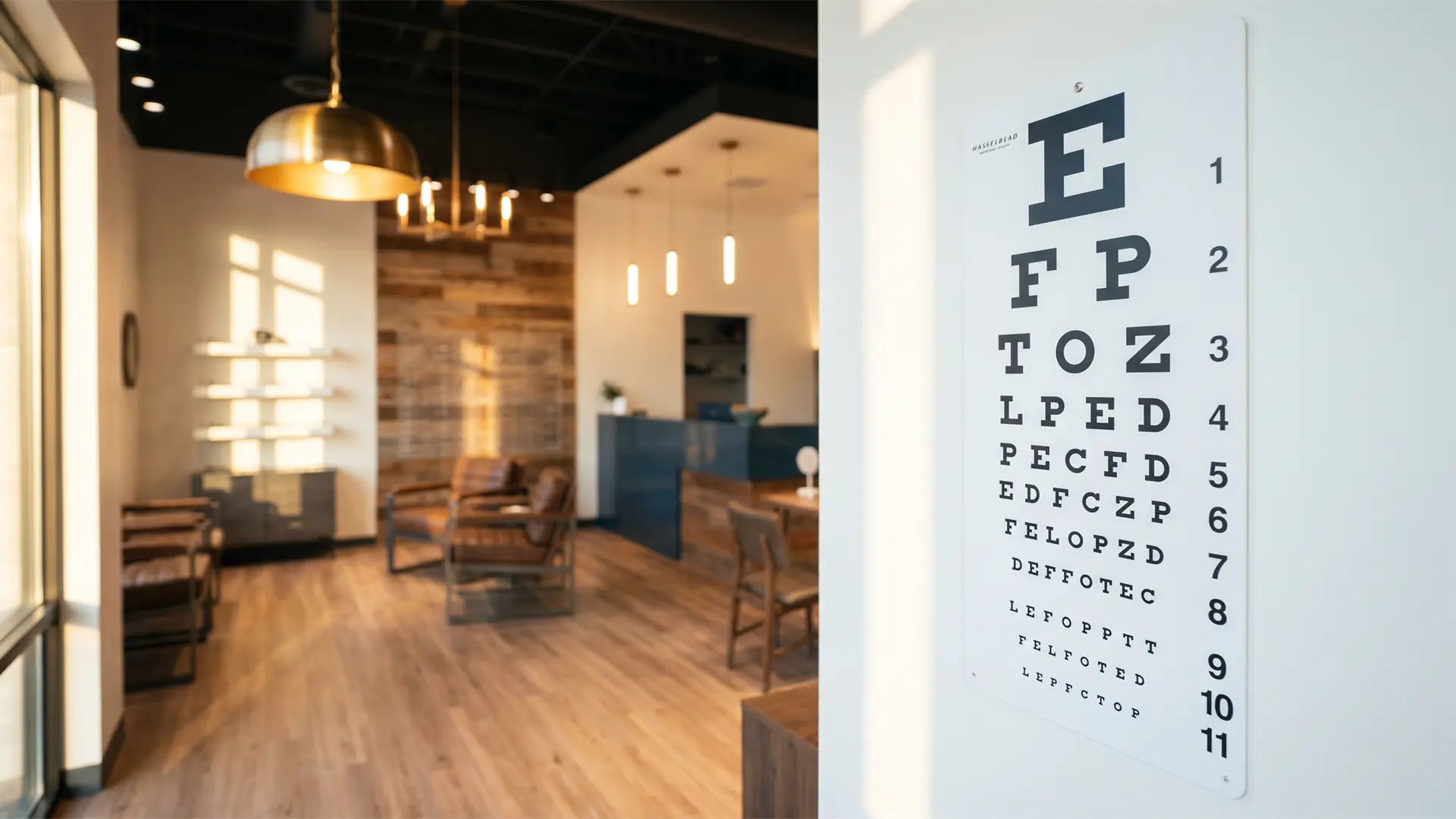
The difference between a vision screening and a comprehensive exam
A vision screening (like the one at the DMV, a school nurse's office, or a vision-only chain) checks whether you can read an eye chart. It's a basic check of central distance vision, and that's it.
A comprehensive eye exam evaluates both your vision and the health of your eyes. It typically takes 45 to 60 minutes and includes refraction (your exact prescription), intraocular pressure measurement, slit-lamp examination of the front of the eye, and evaluation of the retina and optic nerve. Often it includes OCT imaging — a non-invasive scan that detects structural problems years before they affect vision.
Screenings catch obvious problems. Comprehensive exams catch silent ones.
What an eye exam looks for that you can't
The retina is the only place in the body where blood vessels and nerves can be observed directly. That makes a comprehensive eye exam one of the best preventive health checks available, and it catches things you would never feel:
- Glaucoma — the "silent thief of sight." Slowly damages the optic nerve with no symptoms until significant peripheral vision is lost. Affects 3 million Americans, half undiagnosed.
- Age-related macular degeneration (AMD) — the leading cause of vision loss in adults over 60. Early dry AMD has no symptoms.
- Diabetic retinopathy — the leading cause of preventable blindness in working-age adults. Usually no symptoms until advanced.
- Retinal tears or detachments — can progress to permanent vision loss within days if untreated.
- Cataracts — gradual lens clouding, often unnoticed until vision is already affected.
- Eye pressure issues — can damage the optic nerve regardless of glaucoma diagnosis.
By the time you'd notice these on your own, the disease is usually advanced. Detection during an exam — when treatment is still effective — is the entire point of routine exams.
Eye exams catch more than eye problems
Because the retina shows your blood vessels and nerves directly, eye exams frequently catch systemic health conditions before they're diagnosed anywhere else:
- Type 2 diabetes — early diabetic retinopathy can appear before a primary care diagnosis
- High blood pressure — shows up as vascular changes in the retina
- High cholesterol — visible as deposits in retinal blood vessels
- Autoimmune disease — uveitis and other ocular inflammation often signal systemic conditions
- Neurological issues — including some types of brain tumors that affect optic nerve appearance
- Stroke risk — visible retinal vascular changes can precede stroke
For patients without a primary care physician, an annual eye exam is one of the few preventive health touchpoints they have. When we find something, we coordinate with primary care or recommend specific follow-up.
How often should you get a comprehensive exam?
General recommendations:
- Healthy adults under 60: every 1 to 2 years
- Adults over 60: annually
- Diabetic patients (any age): annually at minimum, regardless of vision
- Glaucoma suspects or family history of glaucoma: annually
- Contact lens wearers: annually
- Children: at 6 months, age 3, before kindergarten, and annually thereafter
- Anyone with new symptoms — vision changes, headaches, flashes, floaters, eye pain — call us, don't wait for a routine exam
The "I see fine, I don't need an eye doctor" pattern is the most common way patients end up with preventable vision loss. Catching glaucoma at year 1 means decades of preserved vision; catching it at year 10 often means damage you can't undo.
What to expect at a comprehensive exam
At Ozark Eye, exams take 45 to 60 minutes. The visit includes:
- Vision testing and refraction (your current prescription)
- Eye coordination, focusing, and binocular vision evaluation
- Intraocular pressure check (glaucoma screening)
- Slit-lamp evaluation of the cornea, lens, and front of the eye
- Evaluation of the retina and optic nerve (sometimes with dilation, sometimes with OCT imaging)
- A real conversation about findings, in plain language, before you leave
If you need an updated glasses or contact prescription, you leave with it. If we find something that needs follow-up, you leave with a clear next step. No portal messages later, no guesswork.
Most insurance plans cover an annual comprehensive exam. Even if you're paying out of pocket, an exam costs a fraction of treating advanced disease.