
Specialty Contact Lenses in Pea Ridge
If standard contacts have never worked for you — too uncomfortable, bad vision, or your doctor said you 'can't wear contacts' — there's a good chance specialty lenses can.
What sets our specialty contact lenses apart.
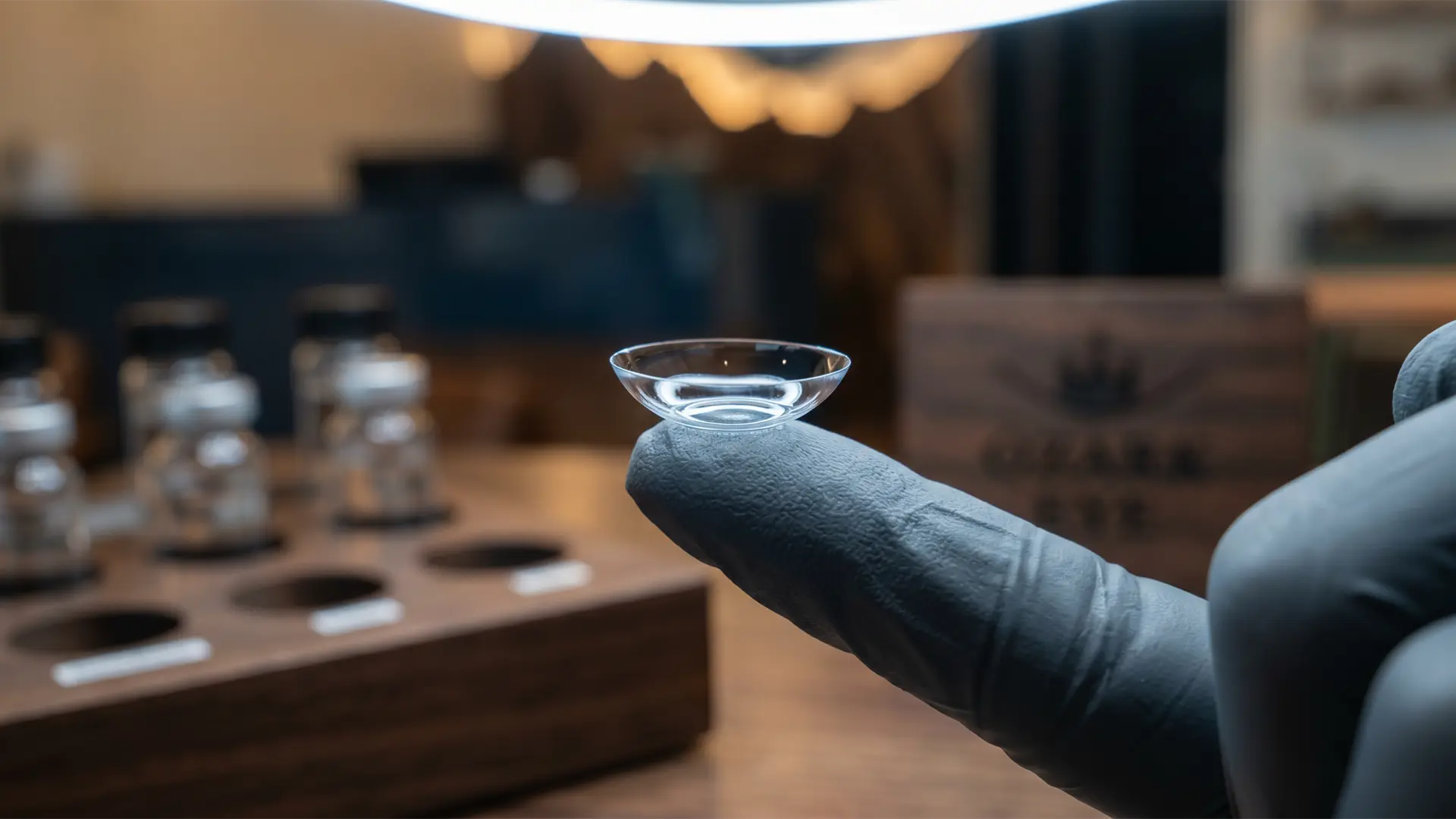
Specialty lens fitting is part science, part craft. Dr. Daiber maps the exact shape of your cornea, designs a lens to match it, and refines the fit until vision and comfort hold up across a full day of wear.
Corneal topography mapping
High-resolution imaging of the cornea's exact shape — the foundation of every specialty fit. Without accurate mapping, the lens is a guess.
Scleral lens fitting
Large-diameter rigid lenses that vault over the cornea and rest on the sclera. The space between holds a layer of preservative-free saline against the eye all day — sharp vision and continuous hydration in one design.
Custom soft & RGP lenses
For high astigmatism, presbyopia, or unusually steep/flat corneas where mass-produced contacts don't fit. We design to your eye, not a stock catalog.
Hybrid lens designs
A rigid optical center with a soft outer skirt — for patients who need the sharpness of an RGP and the comfort of a soft lens.
Ortho-K overnight lenses
For nearsighted patients (especially children) who want clear daytime vision without daytime contacts. Learn more about Ortho-K and myopia control →
Multi-visit fitting protocol
3 to 5 follow-up visits over 6 to 8 weeks to dial in fit and comfort. Specialty lenses aren't a one-and-done — getting it right takes time, and we don't skip steps.
Your specialty lens fitting journey.
Specialty lens fitting is a multi-visit process designed to get the fit and vision exactly right. Most patients are wearing their final lenses confidently within 4 to 8 weeks.
Consultation & corneal mapping
We review your prior contact-lens history, the conditions or surgeries that brought you in, and any past attempts that didn't work. Then we map the exact shape of each cornea using high-resolution topography — the foundation of a successful fit.
Initial fit & trial wear
Based on your mapping data, Dr. Daiber selects (or designs) the first lens. You'll put them on in-office, wear them for an hour, and we'll evaluate centration, movement, fluid reservoir depth, and vision. Most patients leave with trial lenses to wear at home.
Refinement & prescription tuning
Adjustments based on how the lenses felt in real life. We refine the curve, edge profile, and prescription. Some patients are dialed in here; others need one or two more refinement visits.
Final lenses & training
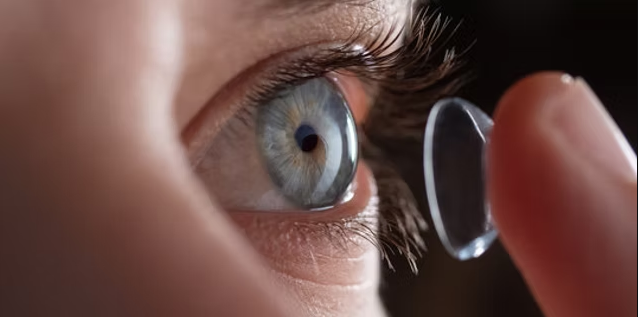
Your final lenses arrive and we train you on insertion, removal, cleaning, and care. We won't send you home until you're confident handling them. Follow-up visits at 1 month and 3 months ensure long-term comfort and eye health.
Conditions we fit specialty lenses for.
If you've been told you "can't wear contacts," there's a good chance you can. Specialty lenses are designed for the eyes that standard contacts don't fit.
Keratoconus
Progressive thinning that distorts the cornea into a cone shape. Sclerals are the gold standard for restoring clear, stable vision.
Pellucid marginal degeneration
A keratoconus-related thinning that responds well to scleral and custom RGP fits.
Severe dry eye disease
The saline reservoir in a scleral lens keeps the ocular surface hydrated all day — life-changing for patients with chronic dryness. See dry eye treatment →
Post-LASIK or post-RK irregularity
When refractive surgery leaves an irregular cornea, sclerals and custom lenses can restore the vision quality you had before.
Corneal scars & transplant eyes
Scarring from infection, injury, or post-transplant healing changes the corneal surface. Custom lenses fit the new shape.
High & irregular astigmatism
When toric soft lenses don't deliver crisp vision, RGPs or hybrids often do.
Ocular surface disease & GVHD
Graft-versus-host disease and other inflammatory ocular surface conditions benefit from the protective, hydrating environment of a scleral lens.
Hard-to-fit standard wearers
If soft contacts have always been uncomfortable or never given sharp vision — there's a custom lens that probably will.
Read more: The power of scleral lenses for dry eyes, keratoconus, and more →
Common questions about specialty contact lenses
Do scleral lenses hurt or feel weird?+
Most patients are surprised by how comfortable they are. Unlike RGPs that sit directly on the sensitive cornea, sclerals vault over it entirely and rest on the white of the eye, which has fewer nerve endings. The reservoir of preservative-free saline between the lens and cornea keeps the eye hydrated and feels natural within a few minutes of insertion.
I have keratoconus. Can I still wear contacts?+
Yes — and you should. Specialty lenses, especially sclerals, are the gold standard for keratoconus. They create a smooth optical surface over the irregular cornea, restoring sharp vision when glasses and standard contacts can't. Many patients see better in scleral lenses than they ever have with any other correction.
How much do specialty lenses cost?+
Specialty lenses are more expensive than standard contacts because each pair is custom-designed for your eyes. They typically last 1 to 2 years per pair. Medical insurance often covers a significant portion of the fitting and lens cost for documented conditions like keratoconus, irregular astigmatism, post-surgical corneas, and severe dry eye. Call (479) 208-6175 and we'll verify benefits and quote you before you book.
How are scleral lenses different from regular RGPs?+
Both are rigid gas-permeable lenses, but they fit very differently. Standard RGPs are small (about 9mm) and sit directly on the cornea. Sclerals are large (15 to 22mm) and vault entirely over the cornea, resting on the sclera. Because they don't touch the cornea, sclerals are usually more comfortable, more stable, and better for patients with sensitive or irregular corneas.
How long does the fitting process take?+
Plan on 3 to 5 visits over 4 to 8 weeks. The fitting starts with corneal mapping, then initial trial lenses, then one or more refinement visits to dial in fit and prescription. We don't rush — comfort, vision, and long-term eye health depend on getting it right.
How do I insert and remove sclerals?+
Sclerals are inserted with the lens filled with preservative-free saline — you bend forward and apply them from below, which keeps the saline reservoir intact. Removal uses a small suction tool. It feels awkward the first few times, then becomes routine. We won't send you home until you can confidently insert and remove them on your own.
Are specialty lenses safe to wear long-term?+
Yes, when fit properly and cared for correctly. Modern materials are highly oxygen-permeable, and the saline reservoir actually protects the cornea throughout the day. Follow-up visits every 6 to 12 months catch any fit changes early. Sleeping in sclerals is generally not recommended unless specifically directed.
I've been told I'm "not a candidate" for contacts. Should I try anyway?+
It depends what the prior doctor based that on. If they only tried standard soft contacts and you have an irregular cornea, severe dry eye, or a complex prescription — there's a strong chance specialty lenses will work. A consultation with corneal mapping is the only way to know for sure.
Ready to get started?
Book a specialty contact lenses appointment online or call us directly. New patients welcome.
Let's see what good vision can do.
Book online in under a minute, or call us directly. New patients welcome.