
Emergency Eye Care in Pea Ridge
Eye emergencies need attention fast. We hold same-day appointments for urgent issues — and seeing an optometrist is almost always faster (and less expensive) than going to the ER.
Conditions we treat same day.
Optometrists are trained to diagnose and treat the same eye conditions an ophthalmologist or ER does — usually faster, at lower cost, with the right equipment on hand. Here's what we can take care of without a hospital trip.
Foreign object removal
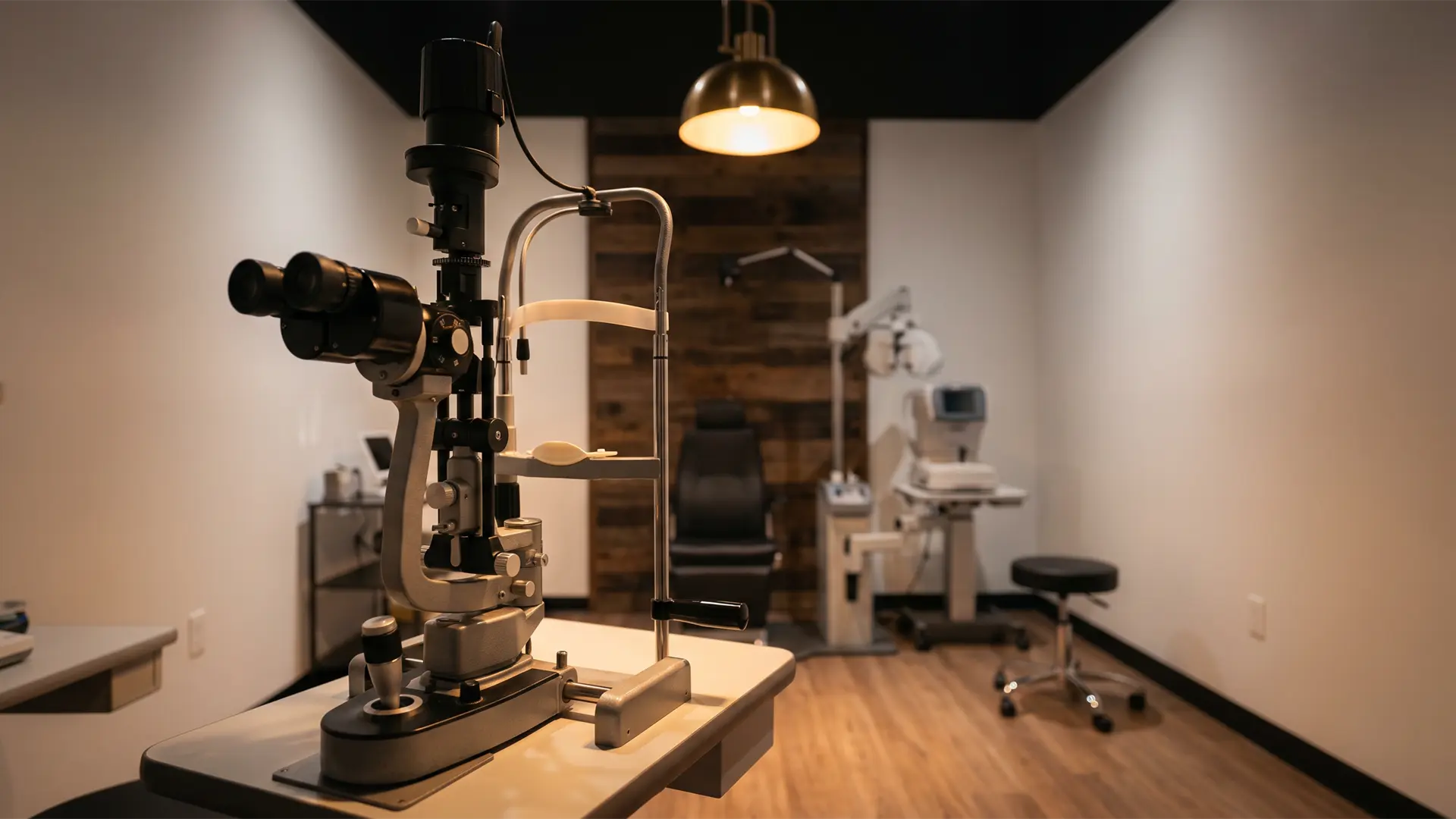
Metal shavings, glass, wood, sand, and other debris embedded in the eye or cornea. We use a slit lamp and specialized tools that the ER usually doesn't have access to.
Eye infections
Pink eye (bacterial, viral, or allergic), styes, corneal ulcers, blepharitis flare-ups. We identify the type and prescribe the right treatment — antibiotics, antivirals, or anti-inflammatories.
Corneal abrasions & scratches
From contact lenses, fingernails, branches, debris. We numb the eye, check for embedded particles, treat to prevent infection, and patch or bandage-lens when needed.
Sudden vision changes
Blurry vision, partial vision loss, double vision, sudden onset floaters or flashes. These can signal retinal tears, detachments, or other urgent conditions that need same-day evaluation.
Eye pain & redness
Severe pain, photophobia, or red eye that won't resolve. We rule out uveitis, acute glaucoma, corneal infection, and other causes that need immediate treatment.
Chemical exposure & burns
After thorough rinsing (do this first — see below), we evaluate the cornea, prescribe treatment, and monitor healing. Severe chemical burns may need ER co-management.

What to do right now, before you arrive.
The first few minutes matter. Here's the right action for the six most common eye emergencies — then call us.
Chemical splash in the eye
Rinse immediately with clean lukewarm water or saline for at least 15 minutes — keep the eye open and let water flush continuously. Don't stop to call. After rinsing, call us or 911 depending on severity. Strong acids and alkalis (drain cleaner, oven cleaner, bleach) are emergencies — keep rinsing the entire drive.
Something stuck in the eye
Don't rub it. Don't try to remove anything embedded — that can drive it deeper or scratch the cornea. Blink gently. If it's loose debris (eyelash, sand), let tears flush it. If it doesn't come out or you feel something sharp, call us. We have the equipment to remove it safely.
Blow or impact to the eye
Apply a cold compress (not pressure) for 15 minutes to reduce swelling. Watch for: vision changes, blood pooling in the eye, severe pain, or a pupil that looks irregular. Any of those — call us immediately or go to the ER if it's after hours.
Sudden vision loss or flashes & floaters
This is urgent. Sudden partial or full vision loss, a "curtain" over your vision, or new flashes paired with a shower of floaters can signal a retinal tear or detachment. Call us immediately during business hours. After hours, go to the ER — every hour matters for preserving vision.
Severe eye pain or red eye
Don't wait it out. Severe pain with light sensitivity, persistent redness, or vision changes can mean infection, uveitis, or acute glaucoma. Avoid rubbing the eye. Don't use leftover eye drops. Call us — same-day appointments are usually available.
Contact lens stuck or won't come out
Don't panic and don't dig. Wash hands, use rewetting drops or sterile saline, look in the opposite direction of where you think the lens is, and gently slide it. If it won't come out within 15 minutes — stop trying and call us. A lens left in too long can cause infection.
Optometrist or emergency room?
Most eye emergencies are handled faster, cheaper, and with the right equipment at an optometrist. A few situations need a hospital. Here's how to know.
Call Ozark Eye first
- Foreign object on the cornea or in the eye
- Eye infections, pink eye, styes
- Corneal abrasions and scratches
- Sudden blurry vision, flashes, floaters
- Severe red eye, eye pain, or light sensitivity
- Chemical splash (after rinsing 15 minutes)
- Contact lens problems, stuck lenses
Go to the ER (or call 911)
- Penetrating injury or deep cut to the eye
- Object embedded deep in the eye (don't remove)
- Head trauma with eye involvement
- Major chemical burn (strong acid/alkali)
- Sudden total vision loss (after-hours)
- Symptoms of stroke alongside vision changes
- Any eye emergency during our closed hours
When to call us, and what to do otherwise.
During business hours: Call (479) 208-6175 first. We hold same-day appointments for urgent issues. If we're booked, we'll triage by phone and route you appropriately.
After hours, evenings, weekends: Our office is closed Saturday and Sunday, after 6:30pm Wed/Thu, after 4pm Mon/Tue, and after 1pm Friday. For true emergencies during closed hours, go to the nearest emergency room or urgent care — Mercy Bentonville and Northwest Medical Center Bentonville both have 24-hour emergency departments. For non-urgent issues that can wait, call us and leave a message — we triage first thing the next business morning.
For more on recognizing eye emergencies, read our guide: Is this an eye emergency? How to know when it's serious →
Common questions about emergency eye care
Is this a real emergency, or can it wait?+
If you have sudden vision loss, severe eye pain, flashes of light with new floaters, a chemical splash, or a deeply embedded object — treat it as an emergency. Call us immediately during business hours, or go to the ER after hours. For less severe issues (mild redness, itchy eyes, blurry vision that comes and goes) — call us and we'll triage by phone. When in doubt, call. We'd rather see you for nothing than miss something serious.
Should I go to the ER or come to you for an eye injury?+
For most non-traumatic eye emergencies, an optometrist is the better first call — we have the slit lamp, magnification, and corneal-specific tools the ER often doesn't. We can typically see you the same day, and a visit costs significantly less than an ER bill. Go to the ER first if: you have a penetrating eye injury, a deep cut, head trauma alongside eye symptoms, or it's after our business hours.
Can you remove a foreign object from my eye?+
Yes. We safely remove most foreign bodies — metal flakes (the most common, especially after grinding or welding), wood splinters, glass, plastic, sand. We use a slit lamp and specialized instruments designed for the cornea. Don't try to remove anything yourself if it doesn't flush out with tears — you can drive it deeper or scratch the cornea.
Do you treat pink eye (conjunctivitis)?+
Yes. Pink eye comes in three main types — bacterial, viral, and allergic — and they need different treatments. We diagnose the type, rule out more serious conditions that mimic pink eye (like iritis or corneal ulcers), and prescribe the right treatment. Most cases improve significantly within a few days of proper care.
What do I do if I get something in my eye?+
Don't rub. For loose debris (eyelash, dust, sand), blink gently to let tears flush it. You can also rinse with sterile saline or clean water. If it doesn't come out within a few minutes — or if you feel something sharp, see metal, or feel pain — call us. Don't try to remove anything embedded yourself.
Is emergency eye care covered by insurance?+
Most medical insurance plans cover urgent eye care — emergencies are medical, not routine vision care. Vision-only plans (like VSP or EyeMed) typically don't cover emergencies. We bill medical insurance for these visits. Call us and we'll verify your benefits before or during the appointment.
I see flashes of light or a sudden increase in floaters. Should I worry?+
Yes — see us same-day. New flashes of light, especially paired with a sudden shower of floaters or a "curtain" or "shadow" over part of your vision, can signal a retinal tear or detachment. These conditions can permanently damage vision if not treated quickly. Call (479) 208-6175 right away.
My eye is red and painful. Is it an infection?+
Maybe — but several other things mimic eye infections, including uveitis, corneal ulcers, acute glaucoma, and severe dry eye. Each has a different treatment. Self-treating with leftover eye drops can make some of these worse. Call us and we'll see you the same day if needed.
Eye emergency? Call us right now.
During business hours, we hold same-day appointments for urgent issues. After hours, head to the nearest ER for severe emergencies.
Let's see what good vision can do.
Book online in under a minute, or call us directly. New patients welcome.